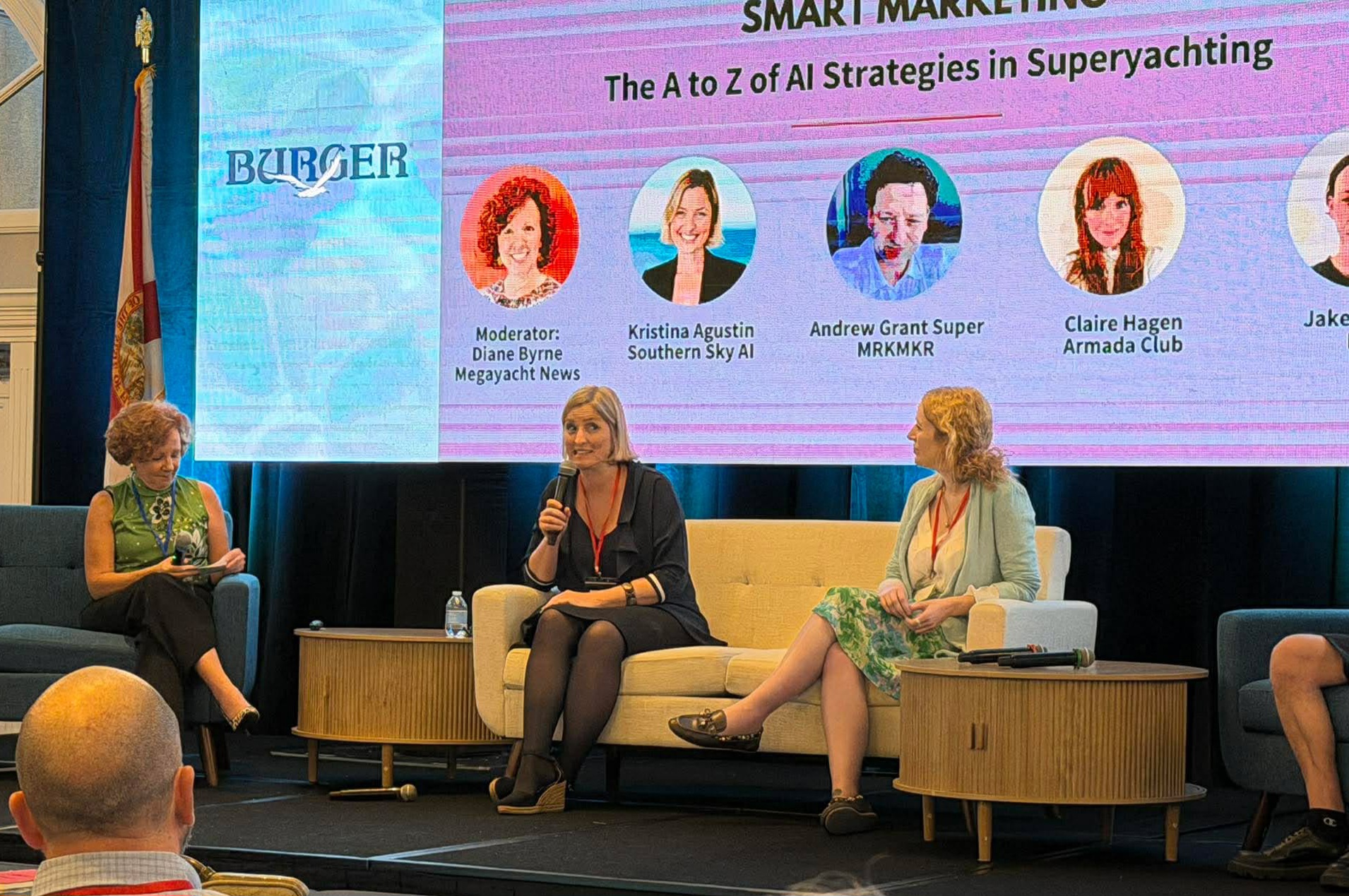

Something significant surfaced across the panel conversations at Palm Beach last week. At the USSA Superyacht Summit, the MARE Forum, and the ISS Leadership Series, the same topic came up repeatedly and without prior coordination between those of us speaking: AI tool choice. Several of the panelists have moved away from ChatGPT as a primary environment, some cancelling subscriptions outright, others retaining it for specific workflow functions while running Claude as their main platform. The consistency of that shift, across people who had not compared notes beforehand, stayed with me.
This article gives maritime leaders a clear picture of what Claude is, why the shift is happening, and how to make the move practically if you decide it makes sense for your work.
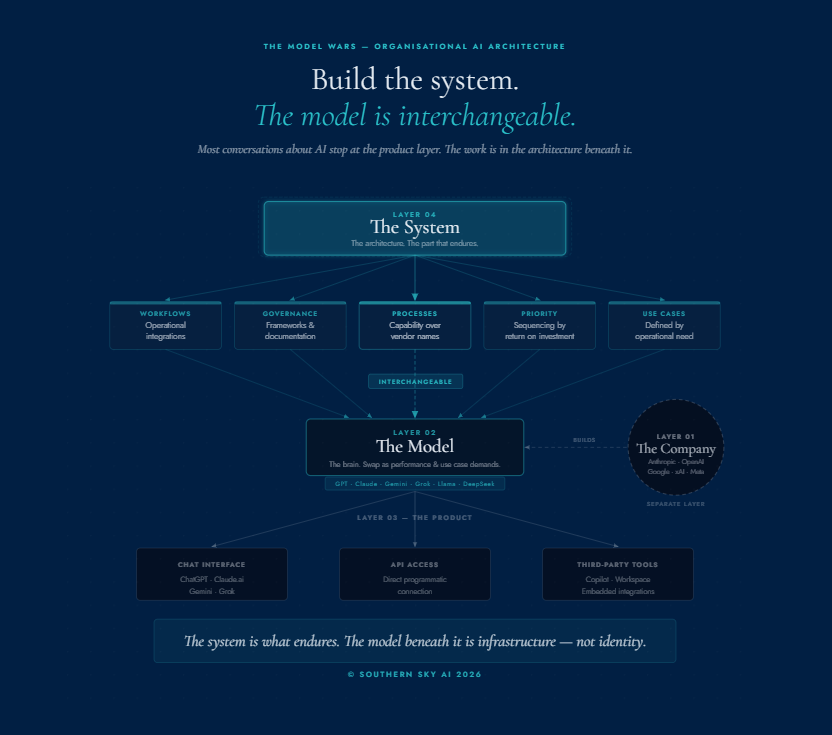
A note before we begin: this article is written for individuals exploring AI at the personal tool level, and that is exactly the right place to start. Building fluency with a chat product, developing an instinct for what these tools can and cannot do, testing capabilities in your own workflow — this is valuable and worth encouraging. This is not, however, the same as organisational AI adoption. Organisational adoption is a different conversation, one that requires a different kind of thinking about architecture, governance, and how AI connects to your operations. If you are thinking at that level, or want to understand the distinction, I have written about it directly: The Model Wars: Don't Get Caught on the Wrong Side covers the four layers of AI — company, model, product, and system — and why most organisations are making decisions at the product layer while the real work sits beneath it.
If you are an individual, a solopreneur, or part of a team of fewer than five, this article is written for you. Keep reading.
What Claude Is
Claude is the AI model produced by Anthropic, a company founded in 2021 by former OpenAI researchers with a safety-first research mandate. When someone says they are using Claude, they could mean several different things, because the product suite has expanded considerably.
The core interface, claude.ai, is the conversational AI platform available on web, iOS, Android, and desktop. This is the closest equivalent to what most people know from ChatGPT. A free tier gives access to the standard model; paid plans unlock the full model range and more advanced features.
Claude Projects are organised workspaces where you load documents, set custom instructions, and run conversations grounded in that material. Each project holds around 200,000 tokens of reference content, which translates to approximately 500 pages of uploaded documents. For maritime professionals carrying compliance documentation, SOPs, technical manuals, and contract templates, this is a meaningful feature. It means your AI assistant can work from your actual documentation rather than general knowledge.
The Claude ecosystem also includes Claude Code, which handles autonomous coding and development tasks, and Claude Cowork, launched in January 2026, which extends those same agentic capabilities to knowledge work more broadly. These sit at a more advanced level of use and are worth understanding directionally, even if they are not the immediate entry point for most maritime professionals.
Why Enterprise Organisations Are Moving
Anthropic's growth over the past year is worth understanding as context, because it reflects where enterprise AI spending is landing. The company has moved from a 12% share of the enterprise AI market to 40% over the past twelve months. That is not a niche preference among early adopters. It represents a significant reorientation of the business sector toward Anthropic's model.
For organisations where writing quality, complex reasoning, instruction-following, and compliance alignment matter, Claude has consistently performed well in professional settings. Our industry operates in precisely that category. Maritime organisations navigate regulatory documentation, high-trust client relationships, and decisions that need to be both legally defensible and operationally clear. The environments where Claude's strengths show up most clearly are environments that should feel familiar to anyone working in maritime.
The Migration Question
The most common thing I heard from people at Palm Beach who were interested in switching was this: I have months of context built up in ChatGPT and I do not want to lose it.
You do not have to.
Anthropic has built a memory import tool directly into claude.ai. The process is straightforward: in your Claude settings, under Capabilities, there is an option to import memory from other AI providers. Claude generates a prompt for you to take into ChatGPT, which returns a structured summary of the preferences and context it has stored about you. You bring that back into Claude, and your working context transfers.
One practical note worth knowing before you start: AI memory at the consumer level is not a record of all your past conversations. It is a curated list of preferences, working styles, and key information the tool has retained over time. It is worth reviewing what imports before accepting it wholesale, and worth supplementing it manually with any specific context you want Claude to carry going forward. The import itself takes under ten minutes once you know the steps.
Going Deeper
If you want to move beyond the basics, Anthropic's documentation is well-structured and accessible without a technical background. The prompt engineering guide is worth reading for anyone who wants more consistent, higher-quality outputs from Claude. You can find it at docs.anthropic.com.
Two features worth prioritising early: Claude Projects, described above, and Claude's extended thinking capability, which allows the model to reason through complex problems step by step and lets you follow that reasoning in real time. For any use case involving multi-step decisions, compliance analysis, or document review, these two features significantly increase the quality and auditability of what you get back.
A Note on Data Privacy
For anyone working in maritime — where client confidentiality, commercial sensitivity, and regulatory obligations are part of daily operations — there is one setting worth checking before you start using Claude regularly.
By default, Anthropic may use your conversations to train and improve its models. For personal use in low-stakes contexts, some people are comfortable with that. For professional use where you are discussing client matters, commercial negotiations, or proprietary operational information, you want that setting off.
In claude.ai, go to Settings > Privacy. Find the toggle labelled "Help improve Claude" and turn it off. The image below shows what that looks like, and what position it should be in.
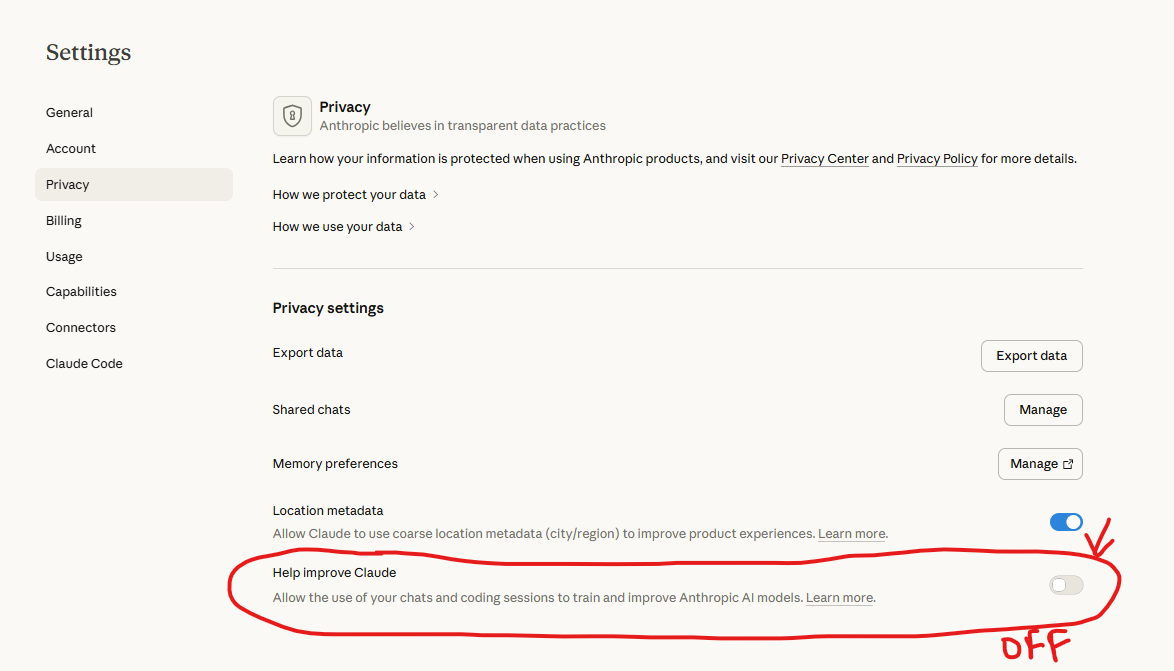
Claude privacy settings showing the Help improve Claude toggle switched off — recommended for professional use.
Settings > Privacy > Help improve Claude. Switch this off before loading any client or operational context into the platform.
This takes thirty seconds and should be the first thing you do before loading any client or operational context into the platform. It applies to your account, not to individual conversations, so you only need to do it once.
Note: this toggle applies to individual and Pro accounts. Claude Team and Enterprise plans have different data handling terms by default — administrators on those plans should review their plan agreement separately.
A Governance Note
Any recommendation to shift AI tools should come with a risk note attached.
Vendor concentration in AI systems carries genuine strategic risk. Maintaining access to at least two AI platforms, and understanding what each does well, is the responsible position rather than building workflows that depend entirely on a single provider.
For organisations with connections to US government contracting, it is also worth noting that Anthropic has been involved in a developing dispute with certain US government agencies as of early 2026. The scope at this point is limited to defence sector use, and the situation continues to evolve. Background context worth tracking, but not something to react to immediately — and certainly not the basis for a technology decision on its own.
Where to Begin
If you are currently using another AI platform and want to explore Claude, the practical starting point is straightforward. Create an account at claude.ai, use the memory import tool to transfer your existing context, and set up a Project loaded with the documents you work with most frequently. Within a week of regular use, most people have a clear sense of whether the switch makes sense for their workflow.
If you are thinking about AI adoption at the organisational level, that conversation starts somewhere different. The Compass AI Blueprint maps your current position and charts a structured path forward. You can request the Engagement Guide at southernsky.ai.
Southern Sky AI Academy is launching in 2026 with structured AI foundations courses built specifically for maritime professionals. Expressions of interest are open now.
Kristina Agustin is the founder of Southern Sky AI, a structured AI adoption advisory practice for maritime leaders. She is an admitted Lawyer, AWS Certified AI Practitioner, IWAI Certified AI Consultant, and is completing a Master of Artificial Intelligence. She has spent more than 20 years working inside maritime operations.