

For Organisations · Done With You
Built around your operation.
Structured AI adoption for maritime leadership teams. Direction first. Then your decision on how to execute.
Request Engagement GuideOutcomes
What changes for your organisation
The work the leadership team has been deferring becomes the work the leadership team is executing.
An AI adoption plan your board has signed off on
A documented Roadmap your leadership team can execute against, with prioritised opportunities, defined timelines, and clear ownership for each initiative. The adoption conversation moves from speculation to scheduled work.
Governance you can defend to an auditor or insurer
An AI Use Policy specific to your operational reality, your data classification, your regulatory environment, and your multi-user access structure. Documentation that holds up when someone asks how AI is managed in your organisation.
Clarity on which AI investments matter and which do not
A Prioritised Opportunity Register that shows which initiatives address real friction in your operation and which would absorb budget without producing results. The register travels with the Blueprint and informs every decision the leadership team makes from there.
A leadership team aligned on direction
Leadership interviews across the organisation produce a single understood picture of where AI fits and where it does not. The strategic conversation becomes a shared one, with the executive team operating from the same Roadmap rather than competing instincts.
Operational capability built around how your organisation actually works
For organisations on the Console pathway, the working environment is configured around your functional structure, your priorities, and your governance posture. Modules are added by function as your capability grows.
A documented position your competitors do not have
Most maritime organisations are operating without an AI adoption plan, an AI Use Policy, or a defined governance structure. Your organisation moves into a documented, defensible, executable position. The Blueprint becomes a strategic asset for board reporting, client conversations, and insurance discussions.
Delivery
How the Blueprint engagement runs
A structured engagement of typically six to ten weeks across four sequential stages, producing a decision-ready Adoption Roadmap your organisation can execute against. Each stage is individually scoped and committed. You decide at the end of each stage whether to continue to the next.
Stage 1 — Opportunity Register
Discovery conversation, leadership interviews across your organisation, and opportunity surfacing. Each interview produces material that feeds directly into the register. Output: a documented register of where AI creates genuine opportunity inside your operation, sequenced by readiness. You decide at the end of this stage whether to continue to Stage 2.
Stage 2 — Risk and Oversight Mapping
Risk classification across the opportunities surfaced in Stage 1. Oversight structure review, decision authority mapping, and identification of where governance needs strengthening before adoption proceeds. Output: a documented risk register and oversight map specific to your organisation's operational reality and regulatory environment.
Stage 3 — Policy Framework
Development of your AI Use Policy, calibrated to your data classification, your multi-user access structure, and the regulatory environment your organisation operates in. Output: the AI Use Policy document, defensible to a board, auditor, or insurer.
Stage 4 — Adoption Roadmap and Blueprint Document
Phased adoption roadmap sequenced to your organisational capacity. Final Blueprint document compiling Stages 1 through 3 into a single structured deliverable. Executive presentation to your leadership team. Output: the complete Blueprint, an AI Use Policy, a Prioritised Opportunity Register, and an Adoption Roadmap your organisation can execute against.
The process
How it works
Direction first. Choose your path.
Direction
Compass AI Blueprint
A structured AI Opportunity and Governance Audit delivered across four sequential stages, producing a decision-ready 3 to 6 month adoption plan. Leadership interviews, risk and exposure review, AI Policy Framework, Prioritised Opportunity Register, and a formal Adoption Roadmap. Documented in a format defensible to a board, insurer, or auditor.
Four sequential stages · Typically 6 to 10 weeks · Each stage individually scoped · Documentation is yours to keep
Guidance
Compass AI Navigator
Ongoing strategic guidance for organisations executing the Blueprint Roadmap themselves. Monthly briefings, governance review, vendor and platform decision support, AI policy maintenance, and Roadmap progression review.
Monthly retainer · Annual contract · Pause at quarterly review
Infrastructure
Command AI Console
A done-with-you AI working environment built around your organisation, your context, your priorities, your operational structure. Multi-user. Functional channels. Organisational knowledge ingested. Governed from the first day of operation. Modules added by function as your capability grows.
Setup fee · Monthly licence per organisation · Modules per month · Includes Compass AI Navigator
Your Path
Take the Blueprint and execute your way
The Blueprint is yours to keep. Bring it to your internal team, your existing vendors, or your preferred platforms. No ongoing commitment required. Re-engage Southern Sky AI later if your direction changes.
No retainer · No lock-in · Documentation supports any execution path
Oversight and infrastructure
Governance and the client portal
What runs in the background as the work is delivered.
Governance applies across every pathway
The Blueprint produces an AI Use Policy for your organisation. It covers data classification by function, multi-user access structure, output governance, and the oversight responsibilities specific to your regulatory environment. The policy is yours to keep. Console clients see the policy operationalised inside their build, with Compass AI Navigator running alongside as the strategic guidance layer. Navigator-only clients maintain the policy with annual review. Organisations executing themselves take the policy into their own teams. Governance is not optional in any pathway. It is what separates responsible infrastructure from unmanaged experimentation.
Your client portal
Console and Navigator clients receive a portal for the organisation, not one per person. The portal contains your Blueprint documentation, AI Use Policy, briefing notes, and Roadmap progression. Console clients see active and available modules alongside billing. Navigator clients see strategic guidance, decision logs, and policy review history. Your leadership team can see what is in place and what is possible. Add Academy access for nominated team members at any time.
Who it serves
Organisation types we work with
Yacht Management Companies
Compliance tracking across fleet, contract and schedule management, owner reporting, crew management, and charter oversight at scale.
Yacht Programs
Individual yacht operations and the teams that run them, captains, heads of department, pursers, ship's administrators, and the estate or family office representatives overseeing the program. AI adoption configured around the way the vessel operates.
Marina Operators
Berth management, customer communications, maintenance scheduling, seasonal operations, environmental compliance, and digital systems management.
Passenger and Ferry Operations
Passenger safety and duty of care obligations, crew management, route operations, customer experience, regulatory compliance, and the governance of AI tools used across vessel and shore operations.
Refit and Shipyard Operations
Project estimation, technical documentation, procurement workflows, contractor management, and the governance of AI tools used across complex multi-party refit projects.
Maritime Professional Services
Surveyors, brokers, ship agents, port agents, maritime lawyers, and insurance professionals, organisations where document review volume, client reporting, and correspondence management are the primary friction points.
The build
A sample of what gets built in Console
For organisations on the Console pathway, modules are added by function or department. Each addresses a specific recurring friction for that organisation type. Navigator clients use the same opportunity register to guide their own implementation choices.
Common Questions
Common Questions
Investment, timing, and how the pathways work.
Selected Engagements
Selected Engagements
Outcomes from prior Compass and Command work. Full case studies available in the Log Book.

500 staff · 22-vessel harbour fleet · 38 active systems · 9 departments
Thirty-eight systems, nine departments, 500 staff, and an ownership transition in progress.
Eighteen to twenty hours of structured interviews across 13 stakeholders surfaced what the systems could not show: one team member losing 40% of her working week to manual data entry, and the same pattern of invisible reconciliation burden repeating across all nine departments.
Read full engagement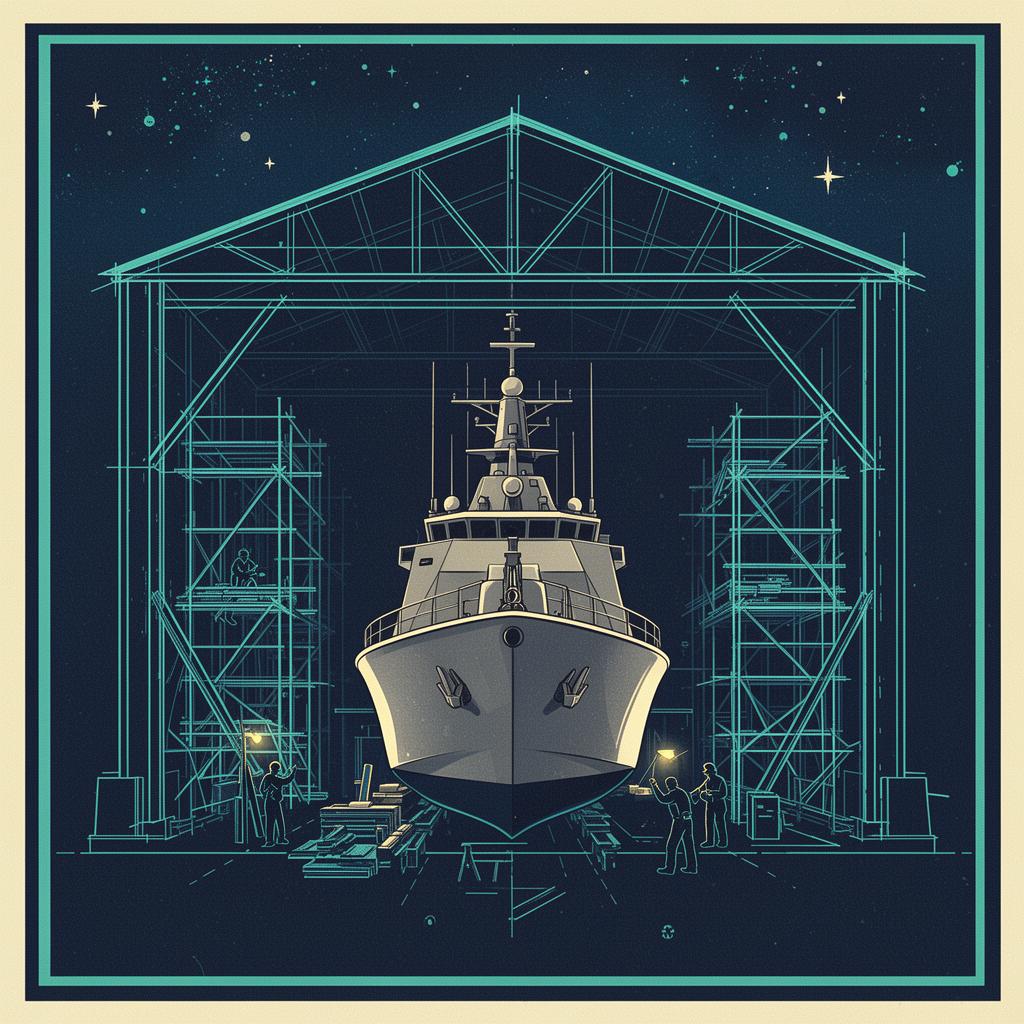
70+ year heritage · Government and defence supply chain · 24-month roadmap · Essential Eight baseline assessed
Seventy years of precision vessel construction for government and defence. With limited formal documentation of its processes.
A structured assessment across 5 stakeholders and 8 operational systems produced 6 prioritised opportunities, a phased 24-month roadmap, and a 90-day action plan with defined success measures, including an Essential Eight cybersecurity baseline aligned to government and defence tender requirements.
Read full engagement
5-month prototype · 85% extraction precision · Unexpected findings in source documents · Global vessel operator platform
Trained reviewers had processed these documents for years. The AI system surfaced critical information that had previously gone undetected.
Built and tested across a five-month prototype period, the system achieved 85% extraction precision on unstructured OEM documents with no standard format, and consistently surfaced critical information that experienced human reviewers had not found in the same source material.
Read full engagement