

AI GOVERNANCE · MARITIME OPERATIONS
A small team managing multiple maritime organisations. Seven recurring operational problems.
Small team
Multiple organisations
7 recurring operational themes
10 strategic goals mapped
Foundational recommendations implemented
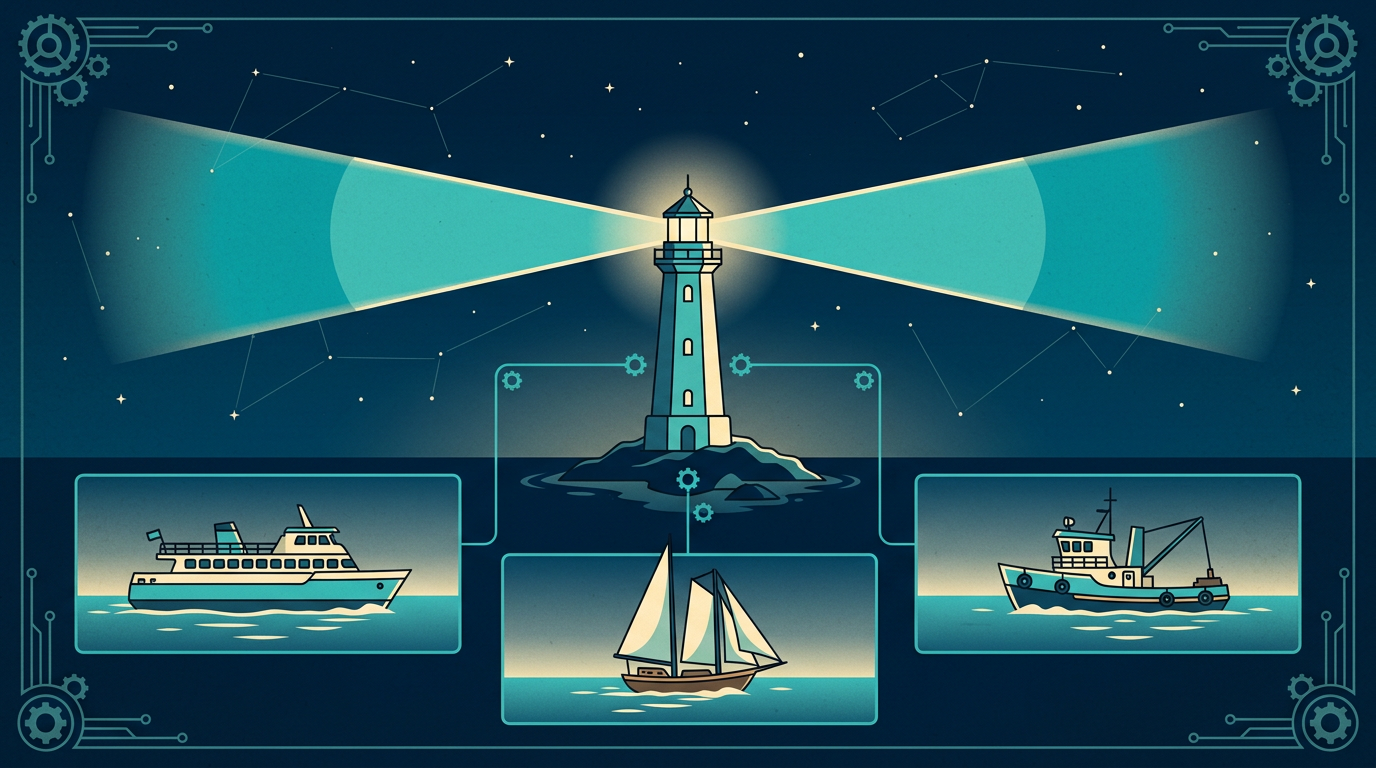
A phased roadmap that identified the foundations, sequenced the work, and gave the team what they needed to act. Online payments running. CRM integrated. Client onboarding connected.
A small team managing multiple maritime organisations. Client services, events, stakeholder engagement, and communications across several distinct areas of the sector. One team carrying the operational load of all of them.
The same 7 operational problems surfaced consistently across every organisation in the portfolio: communication management, client capture, onboarding, payment flows, stakeholder reporting, content, and CRM structure. Not one organisation's problem. The same structural challenge appearing wherever this operating model exists.
Southern Sky AI delivered an AI audit to leadership identifying all 7 themes, mapping solutions across workflow automation and AI-powered support, and producing a phased roadmap across Foundations, Automation, and AI Enablement.
The team implemented the foundational recommendations. Online payments established. CRM integrated with payments and client onboarding. Structural operational changes made.
Seven problems across every organisation in the portfolio. A sequenced plan, a set of foundations built, and a next phase ready to begin.
The Organisation
A small team managing multiple maritime organisations simultaneously, responsible for client services, events, stakeholder engagement, and communications across several distinct areas of the sector. The organisations share operational infrastructure and leadership but carry separate identities, client bases, and stakeholder relationships. The team manages the full operational load across all of them with no functional separation between organisations and no dedicated resource for any single one.
The Situation
Seven operational themes appeared consistently across every organisation in the portfolio. Inbound communication management without a structured system, client capture dependent on manual processes, and onboarding journeys with no automation. Payment flows that required follow-up. Stakeholder reporting built by hand. Content calendars managed reactively. CRM data without consistent structure or segmentation. None of these were unique to any single organisation. All seven appeared across the entire portfolio. The same problems, in the same forms, carrying the same cost in time and coordination, wherever the team looked.
The Work
Southern Sky AI delivered an AI audit to leadership as a structured presentation. Southern Sky AI identified seven recurring operational themes documented across the full portfolio and mapped solutions across two streams: workflow automation to address the structural operational load, and AI-powered support to introduce secure, low-effort AI tools that enhanced what the team was already doing well. Southern Sky AI addressed ten strategic goals across client growth, governance, operational efficiency, and stakeholder engagement, and produced a phased adoption roadmap across three stages: Foundations, Automation, and AI Enablement.
The Outcome
The team implemented the foundational recommendations. Online payments established. CRM integrated with payments and client onboarding workflows. Structural operational changes made across the portfolio. Clean data. Connected systems. Payment and onboarding flows running without manual intervention. The foundation every subsequent phase depends on. The AI build phase follows from that foundation, and the sequencing was deliberate.
The Standard Applied
Southern Sky AI sequences every roadmap so that the foundational work precedes the automation work, and the automation work precedes the AI build work. The reason is straightforward: automation built on broken operational foundations produces broken automation faster. The team in this engagement received that sequencing, understood it, and acted on it in the right order. That is what the Blueprint is designed to produce.
Related from the Log Book
Your position
Every engagement in the Log Book began with a clear read of where the organisation stood. The AI Baseline Report gives you that read in about five minutes.
Get your baseline