

AI GOVERNANCE · SUPERYACHT CHARTER
The highest-return near-term opportunity was already inside the business. It just needed a structured system to work on it.
Small team
Over 5,000 CRM contacts
7 opportunity areas identified
Global charter representation
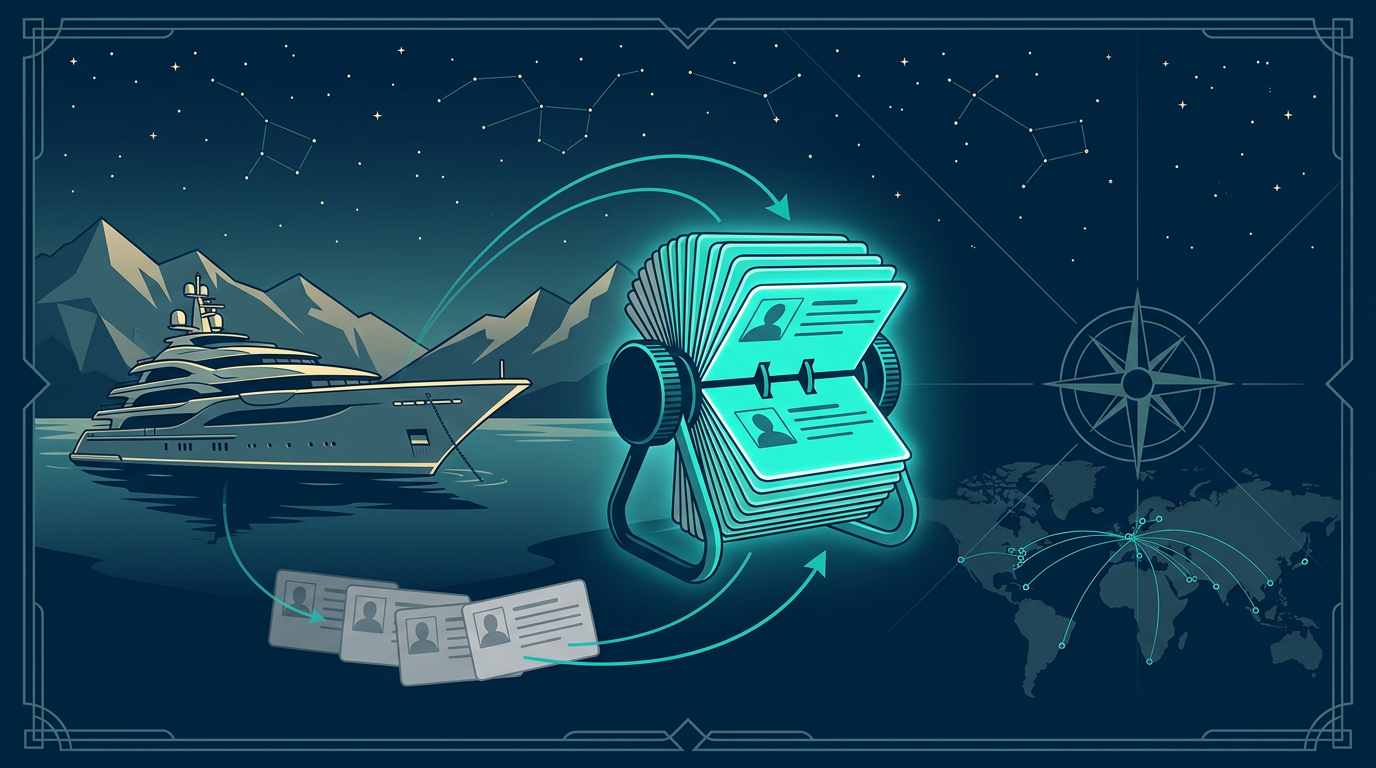
Re-engaging 10 to 20 percent of a dormant contact database of more than 5,000 using the CRM they already owned, with a sequenced three-phase plan to act on it.
A global superyacht charter agency. Small team. Central agency and retail charter representation across international markets. Over 5,000 contacts in a CRM with no structured system working on them.
Southern Sky AI mapped 7 opportunity areas across the operation and produced a three-phase roadmap across Foundations, Automation, and AI Enablement. The highest-return near-term move required no new tool. The existing CRM held a dormant contact segment that a structured re-engagement programme could reactivate at a rate of 10 to 20 percent, a meaningful pipeline return from relationships the agency had already built.
Seven opportunity areas. A sequenced three-phase plan. One clear finding: the highest-return next move was already in the business.
The Organisation
A global superyacht charter agency providing central agency and retail charter representation across international markets. Small team. End-to-end charter services for high-net-worth clients across multiple regions, with transactions spanning multiple flag states and jurisdictions. Operating within the commercial charter framework governed by flag state requirements and MYBA standards.
The Situation
Over 5,000 contacts built across years of client interactions, completed charters, and enquiries. The team used the CRM for basic contact management but had not configured it to run automated sequences, identify dormant contacts, or work the re-engagement opportunity sitting inside the existing base. No structured system ran on the contact database. Alongside the CRM underutilisation: inquiry triage, calendar management, content production, cross-channel communication, and the coordination overhead of complex charter transactions, all carried by a small team with no automation reducing the load.
The Work
Structured assessment across tools, workflows, and core functions. Seven opportunity areas identified: CRM automation, lead generation, content repurposing, internal visibility and reporting, return client re-engagement, calendar and operational coordination, and internal knowledge management. Each assessed for impact, effort, and sequencing.
Three-phase adoption roadmap produced. Foundations: data hygiene and CRM configuration. Automation: workflows and sequences running actively on the team's behalf. AI Enablement: higher-order capabilities available once the underlying systems operate correctly. The sequencing was deliberate. Automation built on an unstructured contact base produces noise, not results.
The Outcome
Seven mapped opportunity areas. A three-phase sequenced roadmap. One clear near-term priority: the existing CRM, properly configured for re-engagement, carried a 10 to 20 percent reactivation potential across a dormant segment of more than 5,000 contacts. No new tool required. The highest-return move was inside a system the agency already owned.
Before this work, the team knew opportunity existed but not where to find it. After it, they had a map.
The Standard Applied
Southern Sky AI assessed what the existing stack could already do before recommending anything new. In a small-team operation, the highest cost is not the tools. It is the time required to implement something new. The answer was already in the business.
Related from the Log Book
Your position
Every engagement in the Log Book began with a clear read of where the organisation stood. The AI Baseline Report gives you that read in about five minutes.
Get your baseline